November 9, 2011

Sweet Potato and White Bean Mild Coconut Curry

This one was dead simple.Basically add to a pot with the oil in as you chop, in the usual order - onions, celery, sweet potato etc, get the onions nicely sweated then add everything else in and top up with water to whatever consistency you desire.  I cooked it covered on a nice medium simmer for probably 20 minutes, until the sweet potato was completely tender and luscious, but the celery and fennel still had some crunch.  Back when I ate, I often made my own curry pastes and still today I will often do my own combination of spices.  But I found this nice jar of all-natural (no nasty additives) curry paste on special and gave it a try.  A bit oily but that's OK, it smells delicious.  Why curry though?   Because the spices in curry all combine to aid digestion, and balance out the creamy coconut fats.


Originally I planned for this to have chickpeas instead of the cannelini beans, but when I got to the cupboard I discovered there were none, just the cannelinis.  Never mind.  Also, I chose the fennel because it needed harvesting from the garden so I can reclaim the space to plant out some aubergines (eggplant).  If I'd had some nice leafy greens I'd have used them instead.  I'd also have used fresh coriander over dried if I had some.  This dish would be delicious served with wilted bitter-ish greens like spinach topped with wedges of preserved lemon coated in almond dukkah sprinkles.  Or the classic Indian spinach and paneer, which would add in dairy as well.  Maybe a grain dish too, but there are plenty of carbs in this as is.  Try simple rice or maybe couscous.

A note for those with high-powered blenders too (that'll be most of us) - you don't have to cook this one at all anyway.  If you're fine with raw food (and raw sweet potato, along with fennel is remarkably digestable when Vitamized), then just tip everything straight in the blender, but perhaps delete the onion.

Onion, 1 x med:  30 cal
Sweet potato (raw weight) 450g:  300 cal
Celery 200g (about 4 stalks): 30 cal
Fennel bulb, 1 x med: 30 cal
Cannelini beans, canned, drained, 240g net: 228 cal
Coconut cream, canned, 270ml: 786 cal
Curry paste, mild yellow 60ml: 184 cal
Rice bran oil, 60ml: 520 cal
Coriander, dried, 1tsp: 0 cal
Water up to 2 litres total volume.

Total volume 2 litres = 8 x 250ml servings @263.5 cal each
1.05 cal/ml
31.6 cal/oz

Smells fantastic (the curry ones usually do) and will be super-easy on my digestive system. Sure, this recipe is pretty high in fats, but remember that most of it is from the coconut cream, and 66% of that is MCT oil which does not require digestion.  If you wanted to boost the calories in this, a very easy way would be to add in say 50g of seeds, 50g of nuts, and perhaps some blackstrap molasses, or honey, or maple, or agave syrup.  None of these would thicken the blend too much but add lots of cals.  This blend pours nicely, but will need thinning by (I estimate) 15 to 20% for serving easily with a gravity bolus.  Having no grains in, and being cooked, I don't expect it will thicken much if at all when cooled.


Hope you try this one yourself. :-)


Share/Bookmark

November 8, 2011

Millet Seed and Fruit Breakfasty thing.

I can imagine this working really nicely as a warm toasty fresh porridge, maybe with stewed apple or fresh banana instead of the mango if you're having it hot.  You'd of course only cook the millet and throw in the dried cranberries half-way to rehydrate a bit and get squishy, then just toss all the rest of the ingredients through.  I used mango today because I had two lying around.  You could also swap in any old grain.  If you used raw oats then you could do the whole thing raw as a cold muesli with cold oat milk.  Yum!


Anyway, it's a high-cal, fairly low-GI and very easy-to-make blend, at 41 cal/oz.

Millet, 1/4cup/100g uncooked weight: 356 cal
Mangos, 2 x med: 225 cal
Pepitas, 50g:  282 cal
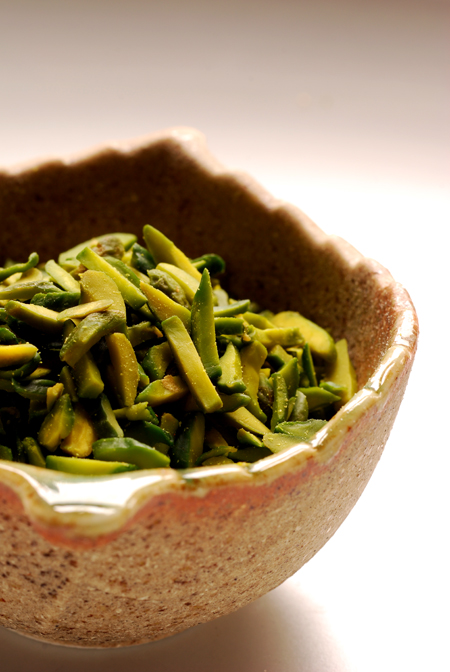
Pistachios 50g:  282 cal
Cranberries, dried, 50g:  161 cal
Dates, fresh, 125g:  320 cal
Tahini, 20ml:  130 cal
Extra Virgin Olive Oil, 60ml:  480 cal
Agave nectar, 60ml:  180 cal
Oat milk 1 litre: 578 cal
Cardamom 1tsp: 0 cal.

Total amounts:  Protein 73g / Fat 107g / Carb 289g

Total volume 2 litres = 8 x 250ml servings @374 cal each
1.49 cal/ml
44.89 cal/oz


You could use this as a template very easily.  Just rotate around the different categories: use different nuts, seeds, dried fruit, fresh fruit, oils, and even the grain and milk substitute.  Imagine what might have a good taste/texture combo if you're going to eat some yourself.  Importantly, to lower the caloric density, you could very easily  triple the amount of millet and delete the agave nectar, adding water to make 3 litres and giving then 35 cal/oz.  This would bring the carb ratio down a bit also, but note that all these ingredients bar the mango are very low-GI so this blend shouldn't cause a 'sugar spike'.

As it turned out, the only things not organic in this blend were the cranberries and cardamom, which was nice but of course not necessary.  I'd never used millet before, and the internet told me that it's best to toast it lightly in the saucepan until it starts to smell all delicious; this brings out the deeper nuttier flavour.  Then add in 3 times the volume of water as  millet, boil, simmer covered for maybe 10 or 15 mins.  This gives you nicely fluffy al dente millet but if you were making a porridge to eat you'd add water in as it cooked and stir it on the way a bit.  I blended the hard stuff for a second or two (literally) first then just plopped everything in and blended for a minute.  Done.

It's cooling right now so I've not had any yet.  Smells pretty nice, with the tahini probably the dominant note. Looking at it just now, I have to say it's surprisingly thin and I'm not expecting it will thicken too much more in the fridge.  As thin as a nice crepe batter perhaps.  That's the thing about using a few hi-cal ingredients of course.  That 100g of nuts and seeds, which is easily less than half a cup, that splash of agave and olive oil and the dates, really give it bang for your buck.  Easily digestible too I should think judging by experience.  I have eaten millet previously, just never cooked with it.

Enjoy!  I shall go and have some now.......
.
.


Share/Bookmark

November 4, 2011

Artichoke and Red Kidney Beans with Fennel and Tomato

Alrighty, as promised, another recipe calculation.  I'll admit that this time because I was already thinking about writing this that I had a little more focus on 'guessing out' the calories to get close to my general goal of 30cal/oz.  25% either way would be fine for me really.  Most meals I add kefir or in summer sometimes juice to dilute just before serving so there's usually extra, which in my case is no bad thing.

But I also tried to think of it as food.  The Hare Krisna religion has food very much in a place at the centre, treating it as a spiritual sacrament as well as bodily nourishment.  As an interesting aside, as well as being lacto-vegetarian, their diet does not contain onion, garlic, or any related plants.  They are viewed as medicine and not food.  What impressed me the most about their food practice is that they cook with a sense of joy and thankfulness, and always prayerfully offer the first bite to Godhead.  They make food that they'd be pleased to plate up for God in other words, and I think that's a great way to approach our nutrition.


So naturally, I am often drawn towards making something that would taste good too.  Or maybe it's just overcompensation because I can't even taste, let alone eat.  Anyway, before the last-minute addition of the agave syrup and walnuts (I'd leave the pine nuts in. Hmm, maybe the walnuts too, but then you'd probably go with grilled goat's cheese on top as well......) this would have been a nice dish.

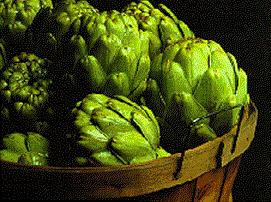
Artichokes, trimmed, x 4:  240 cal
Fennel bulbs, medium x 2:  78 cal
Red Kidney Beans (tinned organic, net weight) 240g:  240 cal
Tomatos, (tinned organic) 400g:  76 cal
Pine Nuts 40g:  270 cal
Extra Virgin Olive Oil 4T:  181 cal
Balsamic Vinegar 1T: 36 cal
Walnuts 50g: 348 cal
Agave syrup 100ml: 300 cal
Oat milk, organic, 1L: 580 cal
Cous cous cooked (dry weight) 100g: 341 cal
braising water added to thin for blending also

Total volume2.25 litres = 9 x 250 ml servings @298 cals each
1.19 cal/ml
35 cal/fl oz.

I cooked it as if for plating up, as it seemed right to do that.  I simply braised the trimmed artichoke quarters and sliced fennel in a little water for maybe 5 or 10 minutes (they were both fresh from the garden 5 minutes before), drained the water, keeping it for blending later, then added in the tomatoes, kidney beans, balsamic, some olive oil and just simmered it all for a few minutes.  If I were then to cook for eating people I'd reduce it a bit more and add in some tomato paste too I think.  I'd serve with nicely fluffed couscous (I'd have cooked a lot more though obviously) and the pine nuts scattered on top after being lightly toasted.  Crumble feta over as well, or arrange in a shallow casserole dish with strips of goat's cheese kervella on top and grill until the cheese browns slightly.   But since I was blending I just put the whole lot in the blender with the cooked couscous and wound it up to speed.  it's a pretty faded dusty pinkish red colour, and smells lovely.

.
.


Share/Bookmark

November 1, 2011

Rice 'n' Mango blend.

UPDATE: Edit at the bottom with nutritional calculations also.

I'm going to try and start measuring and calculating some blends for a while.  I'll share the results here, for your interest.  Don't forget you can submit recipes of your own, either as a comment, or email me and then I'll pop them up in the recipes section for all to see.


So here's today's blend; it's a super-simple one, some of my blends can have easily triple the ingredients in them.  Simple to make too.  Cook the rice, while that's happening or resting zip the pepitas  a couple of pulses on high (like, 2 half-second blitzes) and throw in the rest.  Assemble. Blend!

Medium-grain cooked white rice 250g (uncooked weight):  875 Cal
Pepitas (pumpkin seeds kernels) 50g:  282 cal
Kiwi fruit x 5: 250 cal
Large mango x 2: 270 cal
Coconut cream 270ml:  786 cal
Cranberry juice 750ml:  593 cal
Pepper, cardamom, water.  Ingredients organic except for kiwi, mango, cardamom.

Total volume 2.5 litres, = 10x250ml servings @302 cals each.
1.21 cal/ml
36 cal/fl oz

Right now I've just done a basic calorie count.  I aim to next use one of the online tools available to see how it comes out, and give an indication of the carb/protein/fat ratio etc.

This blend is going to be very low protein, you can tell at a glance, and a little bit high in fat with that coconut cream.  But for me the coconut oil is not a real issue even though I have to be very careful with fats (I have almost no gallbladder).  I suspect that's because it's a MCT oil so is absorbed by the small intestine rather than digested by bile action in the stomach.  But it's a blend I'll alternate with a much higher-protein blend, so over time it evens out.  Personally I like the ideas from many old, healthy cultures, that protein is something you need to rest from in your diet, so I'm happy to have meals minus a major protein source.  That said, there will be some in the pepitas and rice.  The idea of this blend is as a light sort of breakfast or mid-afternoon blend, like one might eat a grain and fruit for breakfast for example.  It's a nice thing to pair rice which can be a little 'cloggy' in a digestive sense with a digestive promoters mango, cardamom and pepper, and oil to keep things slippery as well.  My last rice bland also had mango and kiwi, but I used dates, almonds, rice bran oil and agave syrup. Mangos are just coming into full season now, so that was the inspiration.  Often I will just pick intuitively a fresh ingredient that is ready in the garden or is ripe in the shop as a basis to build a blend on.


Consistency-wise, it will not quite gravity bolus, but adding 25-50ml of water just prior to feeding would make it run fine, nice and slowly.  Instead of that, I'll mainly dilute with kefir, which is not quite as thin as water, being made from milk anyway, and I'd use around 100 mls of that or more, depending on how hungry I feel.

Seeing as how I've just been guessing my blends the last couple of years, this will be an interesting exercise!

EDIT: I've run the recipe through the sparkpeople calculator.  It was tricky as I had to go on trust with thing like brand of cranberry juice and they only had coconut milk, not cream (but I compared the tins of each in my pantry and got a good ratio, the only difference between the two is water added).  Here it is, a little different from my calcs but close enough for jazz, as they say.  I'm going to try the nutritiondata site next, and see if I can make it more user-friendly.

These figures are per 250ml serving (kefir not included); vitamin and mineral figures are shown as percentage of RDI.


 Calories328.8
  Total Fat15.9 g
     Saturated Fat13.1 g
     Polyunsaturated Fat0.8 g
     Monounsaturated Fat1.0 g
  Cholesterol0.0 mg
  Sodium42.3 mg
  Potassium441.4 mg
  Total Carbohydrate45.9 g
     Dietary Fiber2.5 g
     Sugars17.0 g
  Protein4.3 g
  Vitamin A8.1 %
  Vitamin B-120.0 %
  Vitamin B-68.0 %
  Vitamin C141.9 %
  Vitamin D0.0 %
  Vitamin E4.8 %
  Calcium3.5 %
  Copper16.9 %
  Folate16.3 %
  Iron20.0 %
  Magnesium17.6 %
  Manganese46.1 %
  Niacin9.8 %
  Pantothenic Acid    4.5 %
  Phosphorus    11.5 %
  Riboflavin3.8 %
  Selenium6.7 %
  Thiamin10.0 %
  Zinc8.5 %

.
Share/Bookmark

August 28, 2011

5 Reasons people get so worked up about BD.

On our Facebook page recently, a member posted something about being concerned with the language used around BD sometimes, about the fervency with which some people talk about it as "the best", and in a corollary fashion how formula (the canned varieties) gets demonized as somehow almost - if not downright - evil.

She's right, some of the language in the BD community can be a tad extreme, and I have often felt uneasy reading the odd comment or post too.  It's worth looking into a little more deeply though, to explore where this sort of stridency might come from.

Back in the early days of my personal tube feeding journey, there really were not many resources online directly related to feeding tubes, less so to using actual food, or a 'blenderized diet' as we often say.  I recall hesitating slightly to join a particular group of people, because some of the comments and language going on did indeed have just the faintest flavour of a cult thing going on.  Worship of a deity-like machine called a Vitamix, and fervent praise of the benefits of things like flaxseed oil, for example.  Also the occasional almost hate-post regards the evils of canned formula and the supposed 'complete nutrition' provided by high fructose corn syrup, isolated whey protein, synthetic fat and a smattering of synthetic vitamins and minerals in a can.  But it was only a tiny background flavour, so I jumped in.  Things have certainly grown and changed a lot since then, but the evangelical streak in some people remains.  There's a lot to like about that, but that territory comes with a need for caution too, as we'll discuss.

Here are some of the main reasons people get so worked up about BD:


1) Because it's a 'eureka!' moment.
So many people come to BD after a long journey of frustration and struggle with tube feeding.  First there's whatever necessitated getting a feeding tube in the first place, the trauma of placement, the loss of mealtimes or more 'normal' feeding as part of the daily routine and then in so many cases the inadequacy or intolerance of commercial enteral formulas.  When someone makes the BD discovery and takes their first steps, and improvement at all is like a miraculous godsend - finally something is giving hope!  And of course, it all makes perfect common sense to you once you see for yourself the positive changes and read the stories of others, and get across some basic truths that most doctors and dietitians still won't acknowledge about fundamental health and nutrition - that we were designed for food, and using an alternative esophagus does not have to stand in the way of that.

2) Because it's such a relief.
When BD works, and improvements are seen, it's like a light switching on in the tunnel.  Plus, so many people take their first steps in a supportive environment now, via online forums, Facebook groups, sites like this, and rarely but ever-increasingly with the help of a nutritionist or dietitian.  People no longer feel so alone and medicalized about the whole process of feeding themselves or their loved one.  The BD club is inclusive, for the most part.

3) Because people want to share good things, and 'give back'.
When something great changes in your life and it comes with the help of a supportive community - a new group of friends - then the urge to help others out, to give back, comes very strongly to some.  It can be a way of further bonding with what for many is a whole new way of being, a door that opened on to an entirely new relationship with the very stuff of life, food, and the gratitude some people feel is truly deep and lovely.  No wonder they gush a bit.

4) Because there really is an opposition out there.
When you've come to BD via a route other than a suggestion from the doctor or dietitian, when you were not made aware at first point-of-call that food was still an option, you realize pretty quickly why that is.  Because there really is a lot of ignorance and flat-out opposition out there.  There is resistance not just from overly-cautious medical thinking (eg "formula is 'complete' and sterile and food can get nasty and contaminated and we can't control what you're getting"), not just from natural conservatism (eg "we've been prescribing formula for years now and we know it's safe and believe it's well-tolerated"), but from subtle commercial pressures also.  Remember you can sell formula, and in that sense it's just like any pharmaceutical product.  It's promoted to the medicos, and incentives are given to recommend X or Y formula.  And some people really rail against systematised rigidity of thinking and inflexibility of practice.  Feel angry about the medical profession's tendency to operate as a controlling authority in people's lives rather than an agency of empowering patients and carers in ways that create a focus on health and wellbeing of the whole person.  And thus, get a bit feisty.

5) There's no more ardent an evangelist than a recent convert.
For some people, the whole BD journey and life-change takes on an almost spiritual significance in their lives.  It is true and fair to say that it has improved the lives of countless people beyond measure.  The actual evidence is overwhelming, both anecdotal and now more and more surveys, studies and scientific papers are showing all manner of benefits of a blended diet made of real food for tube-fed children and adults alike, yet our community feels still like it's a fringe on the edge of the tubefeeding world.  Like there's a whole oppressive weight of ignorance and needless formula dependency and consequent possible ill-health outcomes out there, and this always makes for a feeling of closeness and heightens the emotional strength of those involved in a 'cause'.  So people evangelise, proselytize - spread the word.

Newbies to the BD concept are often understandably cautious, usually traumatized, vulnerable and in great need of help, support and something that makes a positive difference in their lives.  All of us advocating for BD really need to show care in how those seeking such help are made to feel when they see over-the-top expostulations about the evils of formula.  We know that formula has been the root of so many problems for so many tubies; we know that it has actually damaged the health of unknown numbers of kids and adults, but equally we know that this is not always the case and that for many people, formula is just fine, tolerated well, and can be in some cases the ONLY thing tolerated.

The last thing you want to do is badly judge someone who finds that commercial formula is a good fit for them, and does not seem to be any problem whatsoever.  That is not helpful at all.  Remember always that your experience will never match anyone else's about anything, ever.

I believe that canned formula will never make for a complete and proper diet - but I still use it myself, because I also have a great percentage of my intake as BD, and this works well for me.  I have no problem extolling the virtues of blended food as great nutrition for tubies, and have only praise and respect to offer those who feel the same, but it's wise to keep in mind that even though the medical establishment (generalizing outrageously here, but it's pretty close to the truth) is set up against BD, they are not our enemy - nor is canned formula, and those who use it are not just the 'unsaved' yet to be dragged kicking and screaming into your version of common sense and right-thinking.

Let's be loving in the way we do it.  I know most of us are, most of the time, but it does our cause no end of harm, and hurts others who are in vulnerable places, when we go too far.  As in all things, gently is usually best.

In my opinion.


Share/Bookmark

July 17, 2011

Medicine by Mechanics

Here's a little abstract from what really should be a bit of an earthmoving study for tuber folk, especially when we're talking paediatrics.

http://www.jpedsurg.org/article/S0022-3468(06)00320-4/abstract

In essential form, what it points to is this: that the routine practice of doing "antireflux surgery" along with gastrostomy placement seems like a really bad idea now that some evidence is in.  We can safely assume that the "antireflux surgery" spoken of is the Nissen Fundoplication and its variations as this is the main surgical procedure currently indicated in modern medical practice for GER (Gastro Esophageal Reflux).  It's where a section of the stomach is grabbed and wrapped tightly around the bottom of the esophagus, like this:


But let's dig just a little deeper in, because this is interesting, and affects so many people.

This study is published in the Journal Of Pediatric Surgery, and the very first line of the abstract reads :

Previously, we performed concomitant antireflux surgery in patients with abnormal pH study undergoing gastrostomy. This increased complications without always alleviating the troublesome symptom of vomiting.

For me, this is a bit of a facepalm moment in itself.  Where, oh where, has the Hippocratic oath gone; you know, the one that roughly translates as "first, do no harm"?  I have this little problem with the trigger-happy attitude seen so widely - not everywhere mind you, but VERY VERY commonly encountered - in paediatric surgeons when it comes to dealing with reflux problems.

When you have a look at the participants in this study, the vast majority of them (93%) were having a tube placed due to 'oral insufficiency' - for one reason or another they could not take enough nutrition by mouth.  And only 10% of the patients did NOT have GER symptoms.  That is, they usually would have been getting a Fundoplication routinely along with their tube placement.  The study does not make clear exactly for whom the authors are speaking, but this is a peer-reviewed publication, and it would not be unwise to assume it speaks to the average American practice.  For this study though they just put the tube in and where reflux still occurred (and there is no data pulled to show whether the tube placement alone helped with the reflux, which I'd find rather useful to see) they managed it with meds.  Ultimately 7% of the patients were deemed to need surgical intervention.  As opposed to the 90% that would have got it previously just as a matter of course.  The Nissen Fundoplication has been with us since 1955 and only now does a study actually look into the outcomes in a quantifiable and responsible way.  I know I shouldn't be amazed, but such is the price of my eternal optimistic faith in humanity and rationality.

But did anyone notice how else we can read those figures?  Namely that there is an extremely high correlation between oral insufficiency and a pH test indicating GER.  Are we to be surprised that a person (child or adult) who is hungry, who does not have enough food in their stomach, has a high acid level?  All that stomach acid with not enough to do?

Seems to me some very simple things get overlooked when we let those who would see our bodies as mechanisms with parts first and as a whole organism second run away with their thinking.  We know from thee study done on this very site that changing diet from formula to a food-based mixture correlates extremely highly with improving or resolving reflux.  I know, I know, and I know how seldom this would ever be wondered about by doctors and dietitians when a tube-fed person is being spoken of.  In this day and age it's common for doctors not to even address diet with their oral-eating GER patients - "mostly it'd be just a waste of time" one doctor told me as "most people won't change their habits longterm anyway and they'll end up on meds sooner or later."

Sigh.

Anyway, pass this along.  Now we have some actual decent science showing clearly what so many of us have been saying for years.  That the vast majority of surgical interventions for reflux are just plain harmful.


Share/Bookmark

June 23, 2011

Today I am grateful.

NOTE:  This post was originally posted on my personal blog, entropyandlight, and is reproduced here.  For those of you that only really read this blog and want to know my situation this last week or so, please consider reading HERE first.  Thank you.


There is a Maori phrase which I cannot now remember but which roughly translates as
 "the most important thing is the people, the people, the people". 
 Today I feel the strength of that in a truly profound way.

Yesterday I decided finally to act on the suggestion of a friend (thank you) and ask for help with my final act - the rituals of my death.  Since sharing my story with those I have come to know online - so many through my involvement and advocacy in real food for us tubefed folk - my world has expanded exponentially.

I have been a very social person in life: And also not.  Moves around the country and long hours of work plus certain needs to leave certain past previous truths behind meant my world, my world of people, shrank and dwindled.  But of course, in the skein of life that lives outside of time the real friends and connections remained.  I never really felt alone, but at times, not ...........sufficiently connected.  


I sought help online with my tube diet.  I found it.  I admired, and still admire, all those who help and who bravely feed their young and their loved and themselves real food when they can despite such staunch opprobium from such a wide swath of medical opinion across the world.  Accidentally almost, by dint of some time on my hands and my passionate nature, I became one of those who helped as well.  Now I find this repaid a thousandfold with the thoughts, heart, and spirit of friends and strangers alike.  I am strangely uplifted, yet humbled, simultaneously.

And the old friends reappeared.  I did not so much seek them out, but over time they just......popped up, and how I cherish those reconnections.  Some have grown even stronger with the passage of time, perhaps as we grew in similar directions despite not hearing from each other for so many years.  None have lost the spark.  New old friends have been made from once-acquaintances.

So today, as I start the joyous task of preparing for myself - well, really for you - the shapes and flavours, the heart and soul, the music, tears and laughter of my funeral, I am celebrating this:  The people, the people, the people.  For it is in others that we find so much of who we have become.  The necessary opposite of still, personal silence.

Is it unfair to be honest here?  To say that one person stands out?  I am torn.  So I shall be honest.

There is the old Zen koan, which goes something like this: "There was a monk being chased by a tiger, running and running for his life, suddenly confronted with a lack of anywhere to run - a sheer drop down a cliffside.  He hurled himself off, and as he fell he managed to fling out a hand and cling on to a small craggy bush tenaciously growing on the rocky cliffside.  There was a single, tiny berry growing on the bush. How sweet that berry tasted!"


My week has been a little like that.  I was scared for a time, and I was running.  I saw an end; an end that was not peaceful nor far enough away, and I was found wanting in my preparations. I flung myself over that cliff because I simply had no choice but to surrender to the fates.  Meeta is the berry.  How inexpressibly sweet; how boundlessly nourishing of soul to have a friend in life such as her.  In that moment when the people, the people, the people, shrank from view.....as well as the Godhead void, there was her.  For this too, I am grateful.

So I accepted that suggestion, and let the energy come to me in material as well as spiritual ways as well, and when this morning I logged on to find so many had given of their well-needed coin to help us pay for my ritual of passing, it reminded me that sometimes the people, the people, the people, are the berry.

Thank you all, deeply - thank you.

You can still make donations by following the link below.

I will finish by sharing a poem I have just discovered by a very dear old friend, Mark Reid.  So cheekily titled, so.....brutally subtle.

The Falling God?

I heard the aphorism
a god-shaped hole in every heart
& wondered
what could possibly
make such a hole.

.

Share/Bookmark